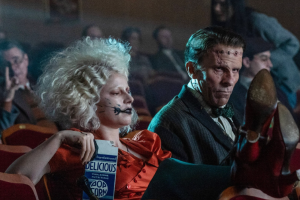
Den Sidste Viking (The Last Viking) Review: When Reality Fractures, Dark Comedy Takes Over
 Abheet Gupta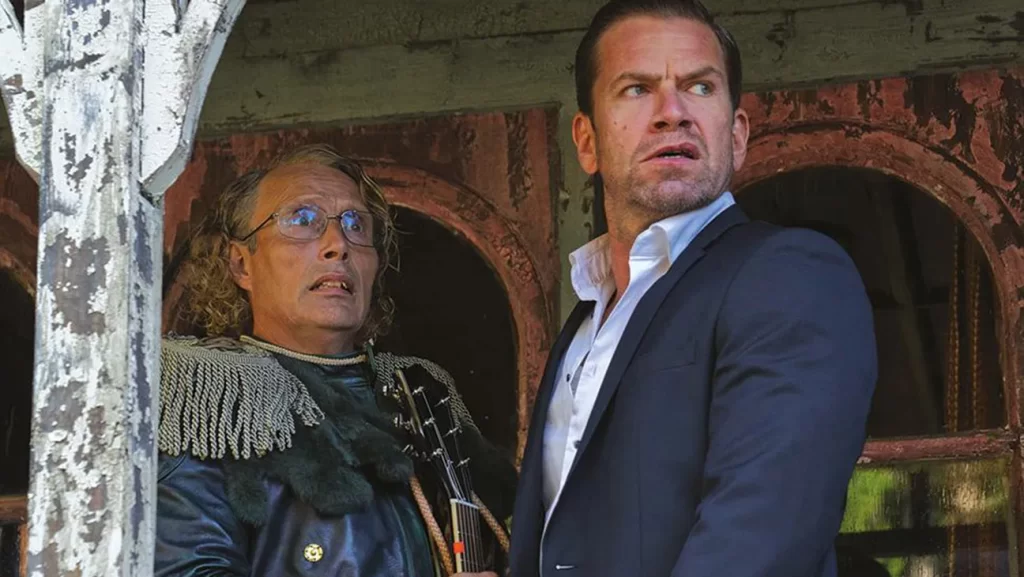
Yet another outing that proves Mads Mikkelsen is often better served outside Hollywood, The Last Viking reunites him with Anders Thomas Jensen, the director behind Adam’s Apples and Riders of Justice, for another pitch-black comedy that is as unsettling as it is darkly amusing. Jensen once again turns his gaze toward mental health, past trauma, and suppressed emotions, crafting a film that constantly questions the nature of reality itself. The Last Viking (Danish: Den sidste viking) is a 2025 black comedy written and directed by Jensen, released theatrically in Denmark on 9 October 2025. Originally titled Back to Reality, the film’s former name feels especially apt and as we proceed, its significance becomes abundantly clear.
An Absurd Premise That Sets the Tone
The premise itself carries an inherent absurdity: while serving a 15-year prison sentence for bank robbery, Anker entrusts his brother Manfred with burying the stolen money for safekeeping. Upon his release, Anker discovers that Manfred has since developed dissociative identity disorder and no longer remembers where the money is hidden.
From the very first beat, the film signals its intentions. A viewer would assume it blends crime, mental health, and comedy, leaning far more into humor than thriller territory, and it delivers exactly that. While the subject matter could easily become heavy or depressing, Jensen ensures the film remains layered and emotionally rich without ever collapsing under its own weight.
Even scenes involving severe self-harm or violence are handled with an unsettling sense of humor. One particularly hilarious running gag involves Mikkelsen’s character harming himself in unique ways while insisting on being called “John Lennon” instead of his real name, Manfred. Yet the film never tips into the whimsical detachment of a Wes Anderson or Taika Waititi project. Jensen knows when to pull back, allowing the emotional and tender moments to land with genuine weight.
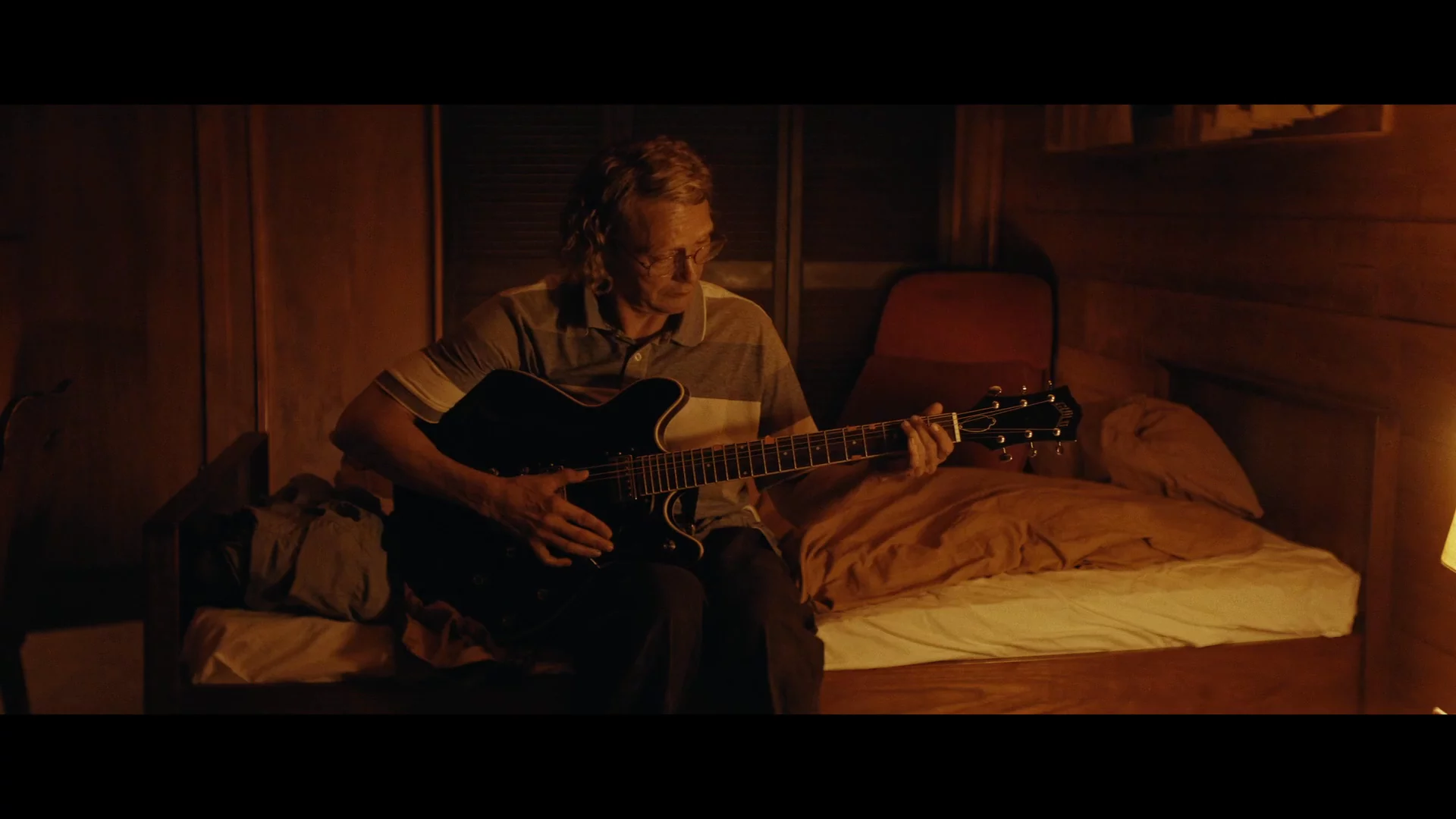
At times, the film ventures into truly dark territory but it never loses itself there, always recovering its balance with purpose and restraint. Beatles fans will find an added layer of delight in an extended subplot centered on Manfred’s obsession with the band, including his quest to form a new group composed of other mentally struggling individuals who identify with different Beatles personas. It’s absurd, funny, and quietly tragic all at once.
Trauma, Identity, and the Power of Lead Performances
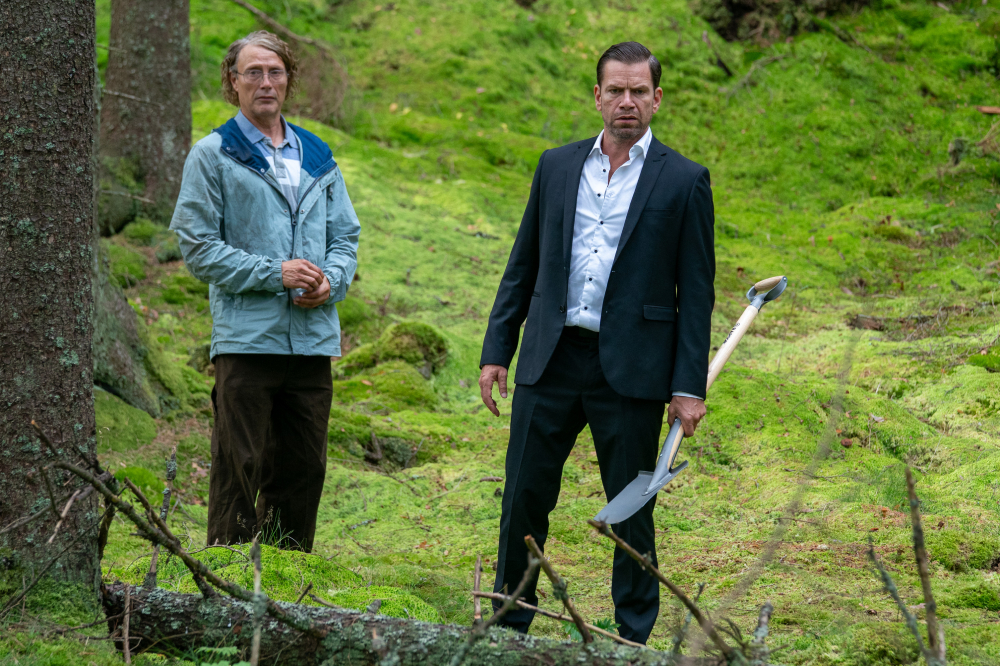
The film boasts one of the strongest screenplays and performances of 2025, paired with striking cinematography and a lasting emotional impact. Having collaborated on all six of Jensen’s films, Mads Mikkelsen and Nikolaj Lie Kaas share a chemistry that goes far beyond surface-level familiarity and this shows in the intricate, deeply human dynamic between their characters.
Mikkelsen delivers a performance that stands in stark contrast to his hardened roles in Riders of Justice, Pusher, Bastarden (The Promised Land), or his Hollywood persona. Here, he portrays an emotionally fragile man grappling with childhood trauma and dissociative identity disorder. It’s impossible not to feel empathy for him or not to root for him even when the film invites laughter through its dark humor. More often than not, the laughter catches in your throat.
Nikolaj Lie Kaas, meanwhile, steps into the hardened role typically associated with Mikkelsen. He plays the emotionally guarded brother who chose crime, anger, and emotional repression as coping mechanisms. Remarkably, Kaas makes an inherently abrasive character deeply watchable, even likable. While Mikkelsen carries the emotional weight of the film, Kaas carries its narrative momentum and it’s precisely at the intersection of these two contrasting personalities that the film finds both its humor and its soul.
A Strong Ensemble and Confident Craft
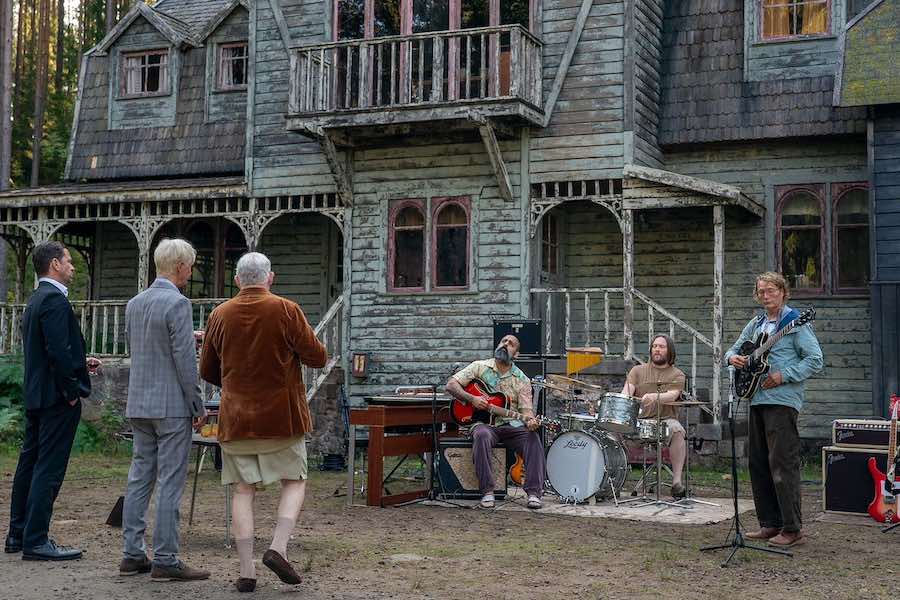
Strong supporting performances from Sofie Gråbøl, Bodil Jørgensen, Lars Brygmann, and Kardo Razzazi ensure that no character feels wasted. Søren Malling and Nicolas Bro provide broader comic relief with more caricatured roles, helping balance the film’s tonal shifts. Crucially, the supporting characters aren’t forgotten. Each is given a meaningful arc that feeds into the larger narrative, tightening the subplots and leaving the viewer satisfied with where everyone ends up.
Technically, the film is impressive. The cinematography by Sebastian Blenkov moves fluidly between expansive landscape shots and claustrophobic close-ups that mirror the protagonists’ psychological states. Jeppe Kaas’ score knows exactly when to swell emotionally and when to retreat into darker, more unsettling tones. If there’s one minor flaw, it lies in the editing. The film could easily have been trimmed by 10–15 minutes without losing its impact. In a few moments, the narrative becomes slightly chaotic, briefly obscuring clarity and focus but these lapses are short-lived.
Final Verdict
HOC Rating – ★★★★
For viewers drawn to twisted, darkly comic storytelling, Den Sidste Viking or The Last Viking is essential viewing. However, those sensitive to depictions of self-harm, violence, or severe mental health struggles may want to proceed with caution. Likewise, audiences who believe such themes should never be treated with dark humor will likely find the film challenging.
While it may not surpass Riders of Justice, it comes remarkably close, thanks largely to immersive performances from Mikkelsen and Lie Kaas, and Jensen’s unwavering confidence in balancing cruelty, compassion, and comedy.
If you have any questions regarding The Last Viking, feel free to ask in the comments below. For more content, stay tuned. As usual, like, subscribe, and share as we here are trying to build a community of people High on Cinema!