Abheet Gupta
Sentimental Value observes, listens, and waits, trusting that if it remains honest long enough, its emotions will find you on their own. Joachim Trier’s latest film is an intimate exploration of family, memory, and artistic inheritance, one that examines how unspoken trauma travels across generations and quietly shapes who we become. Anchored by remarkable performances and guided by a screenplay that values restraint over excess, Sentimental Value emerges as one of the year’s most emotionally resonant cinematic experiences.
Performances Are the Soul of Sentimental Value

The greatest strength of Sentimental Value lies in its ensemble performances, each carefully calibrated to serve the emotional architecture of the film. No actor attempts to dominate the narrative; instead, every performance feels interconnected, as though each character is carrying a fragment of the same unresolved past. Renate Reinsve and Inga Ibsdotter Lilleaas deliver deeply felt portrayals marked by emotional precision rather than theatricality. Even Elle Fanning—whose casting may initially feel unconventional—proves to be a surprisingly effective presence, seamlessly blending into the film’s emotional ecosystem.
However, the film ultimately belongs to Stellan Skarsgård. His portrayal of Gustav is a masterclass in understated acting. While others are afforded moments of explicit emotional release, Skarsgård communicates almost entirely through restraint. Through glances that linger, reactions that are barely perceptible, and silences that speak louder than dialogue. Particularly compelling are the moments where Gustav is simply watching: observing others perform, or watching a film unfold. In these scenes, Skarsgård’s face becomes a site of quiet judgment and reflection, revealing how deeply his character processes the world while remaining emotionally guarded.
Thematic Analysis: The Weight of What Goes Unsaid

Thematically, Sentimental Value confronts intergenerational trauma, emotional neglect, and suicide, but does so with remarkable tenderness. This is not a film interested in assigning blame or diagnosing bad parenting. Nor does it attempt to elevate one worldview over another. Instead, it’s about eliminating villainizing while fostering acceptance and understanding within broken families. It focuses on how emotional wounds are inherited, often unconsciously, and passed down not through cruelty but through silence.
One of the film’s most devastating realizations comes when it becomes clear that Gustav’s film and its suicidal undercurrents are not merely about his mother or his daughter, but also about himself. Trauma, here, is not singular or isolated; it is cyclical. By tracing its impact across three generations, Sentimental Value captures something painfully universal: the way unresolved pain lingers, reshapes relationships, and quietly defines identities long after its origin has faded from memory.
Technical Craft: Precision in Restraint
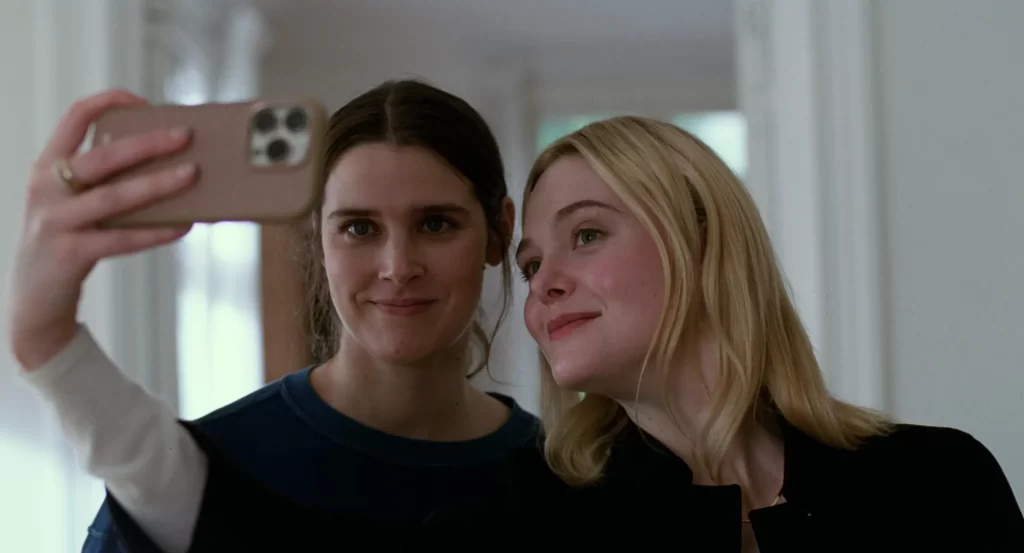
If the performances form the soul of Sentimental Value, the screenplay is undoubtedly its heart. Co-written by Joachim Trier and Eskil Vogt, the script achieves a rare balance between potent dialogue, extended monologues, and subtle emotional undercurrents. While the film may not be presenting entirely new ideas (an almost unavoidable reality in contemporary cinema, since everything has been done already) it distinguishes itself through articulation. The power lies not in what is said, but how and when it is said.
Trier’s direction reinforces this restraint at every level. The film never allows the audience to sink completely into despair, nor does it undercut its emotional weight with self-conscious humor. Like life itself, Sentimental Value exists in a delicate balance making it melancholic yet humane, heavy yet never suffocating. There is an ever-present sadness, but it is softened by moments of quiet warmth and empathy.
The cinematography by Kasper Tuxen mirrors this emotional philosophy beautifully. At times visually striking, at others deeply intimate, the camera adapts fluidly to the film’s shifting emotional needs. As a film that is, in part, about filmmaking itself, Sentimental Value plays thoughtfully with framing, perspective, and symbolism. Lingering close-ups and carefully composed shots often communicate more than dialogue ever could. Talking about the soundtrack and score, it is understated and purposeful, never drawing attention to itself yet consistently enhancing the emotional tone. It does not seek to overwhelm or manipulate, but rather to support the film’s quiet rhythms. Complementing this are well-chosen licensed tracks that subtly reinforce themes of memory, family, and artistic expression without disrupting the film’s emotional continuity.
Final Verdict: A Quietly Devastating Achievement
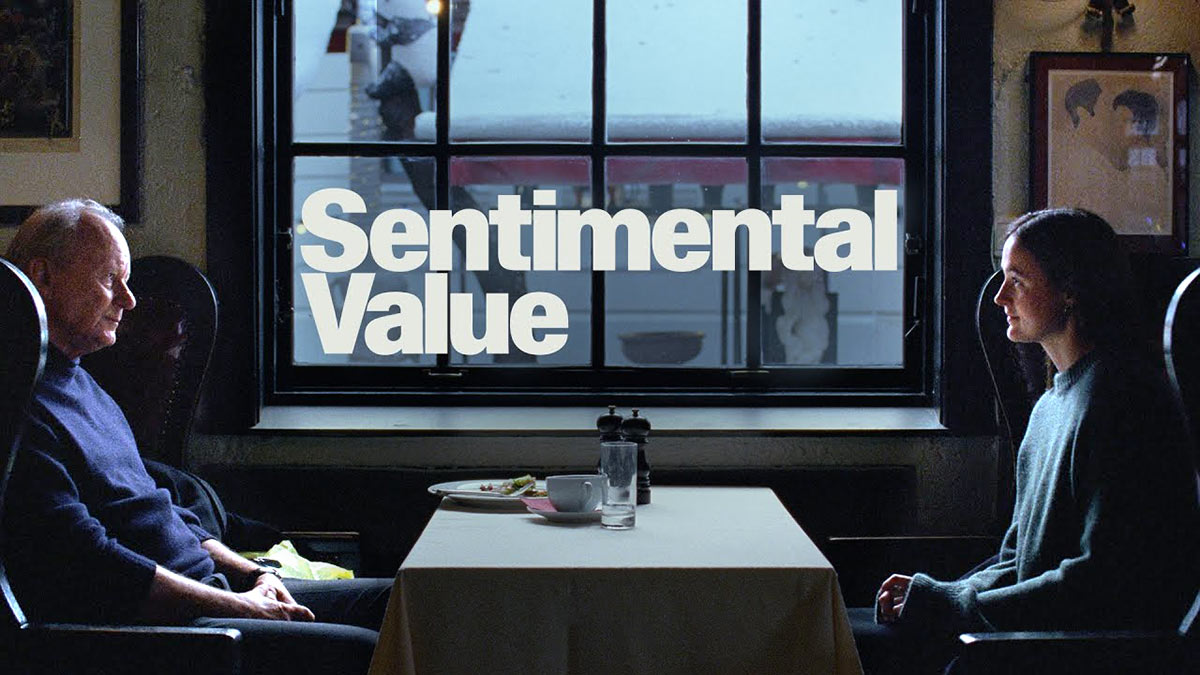
HOC Rating – ★★★★1/2
Sentimental Value is a film built on moments of silent suffering and hard-earned understanding. Its emotional power does not come from dramatic climaxes but from accumulation—from the gradual realization that healing is less about resolution and more about recognition. Through its four central characters, the film explores how love, regret, and creative expression intertwine, often imperfectly, within families shaped by loss.
In doing so, Sentimental Value surpasses the emotional impact of nearly every other film I’ve watched this year. It stands as a deeply humane work and one that understands pain without romanticizing it, and empathy without simplifying it. For now, it has secured a place among my personal top three films of the year and it is but a surety that the film and its cast will be walking out with a box full of trophies in this awards season.
If you have any questions regarding Sentimental Value, feel free to ask in the comments below. For more content, stay tuned. As usual, like, subscribe, and share as we here are trying to build a community of people High on Cinema!