Train Dreams Review: A Minimalist Character Drama That Explores The Journey of the Self
 Abheet Gupta
Train Dreams belongs to that rare lineage of slow, intimate, meditative character portraits — where the protagonist is the plot. It’s a film crafted through silence, landscape, memory, and quiet spiritual evolution. Think Nomadland, Manchester by the Sea, Perfect Days, The Rider. And as expected, it features some of the year’s best cinematography, score, and performances.
Directed by Clint Bentley, co-written with Greg Kwedar, and adapted from Denis Johnson’s celebrated 2011 novella, the film chronicles eight decades in the life of Robert Grainier (Edgerton), a quiet laborer wandering through the rugged landscapes around Bonners Ferry, Idaho. After premiering at the 2025 Sundance Film Festival, the film opened in select U.S. cinemas on November 7, 2025, before arriving on Netflix on November 21.
Well, let’s break it down.
The Soul of Train Dreams: Its Themes and Performances

The film follows the life of lumberjack Robert Grainier, a man whose story is told not through twists or revelations, but through the raw poetry of existence itself. This is an existential film that takes a deep dive — a really deep dive — into a man’s inner world without saying too many words. Its strength lies entirely in its stillness and in a career-best turn by Joel Edgerton.
He may or may not walk away with awards, but he deserves them all. His performance captures the essence of a deeply traumatized, quietly enduring man without ever shouting for attention. There are not many outbursts of emotions in the film which makes the Granier’s quiet mannerisms speak for him in moments of strength and joy; in moments of weakness and grief, as well as everything in between.
While Edgerton dominates the narrative, the supporting cast — though limited in screen time — leave a lasting mark. Felicity Jones’ Gladys Grainier reminds us of life’s small but profound joys before leaving behind a heartbreak that lingers. Clifton Collins Jr.’s Boomer becomes an unexpected rescue line, nudging Grainier toward renewal. William H. Macy’s Arn Peeples delivers philosophical wisdom that hangs in the air long after the scene ends, while Kerry Condon’s Claire Thompson embodies acceptance and hope — the final, necessary phases of healing.
Each character acts as a checkpoint in the journey of any human life:
Love and Joy → Grief → Stillness → Meaning → Acceptance.
Cinematic Craft That Stuns the Senses
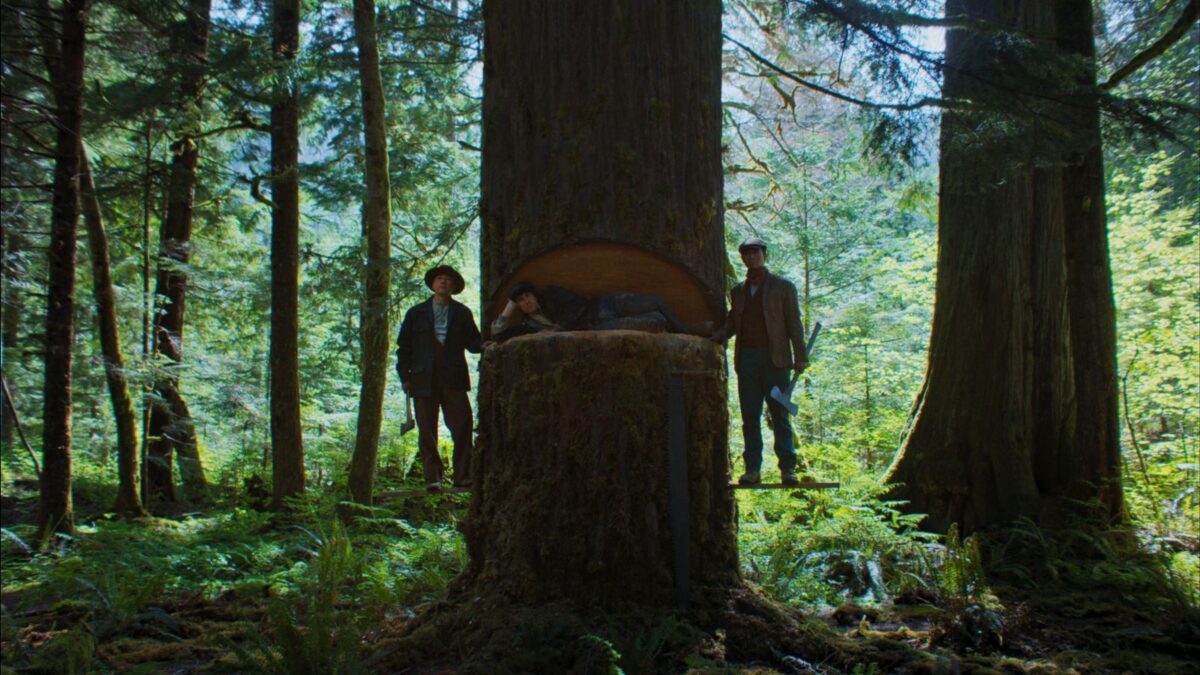
Who knew forests — real forests — could look this magical without being set in Pandora or the Shire? The cinematography by Adolpho Veloso is breathtaking enough to rival big-budget spectacles. From lush green expanses to rugged terrain and quiet interiors, every frame looks hand-carved. The standout early shot that captures the POV of a falling tree is a moment of such bold cinematic grammar that you instantly know you’re in the hands of true artists.
Natural lighting, brilliant production design, and apt costumes collaborate seamlessly to recreate the early 1900s, enveloping you in a world that feels tactile and lived-in. The mise-en-scène is pristine, atmospheric, and unforgettable.
Then comes Bryce Dessner’s mesmerizing score which is a blend of banjos, harmoniums, and soft orchestration that mirrors both the landscape and Grainier’s emotional odyssey. The music shifts between aching grief and quiet transcendence, elevating scenes into meditative experiences.
And just when you think the film has given you everything, it closes with Nick Cave’s hauntingly beautiful title track. It hits like a wave of memory, reflection, and sorrow which leaves you glued to your seat long after the credits roll. The song, too, speaks of the journey of a man from everything he has seen, suffered, dreamed, and ultimately understood, to tracing where it all led him and what it all meant. Could there be a more perfect way to end this film?
Final Thoughts on Train Dreams
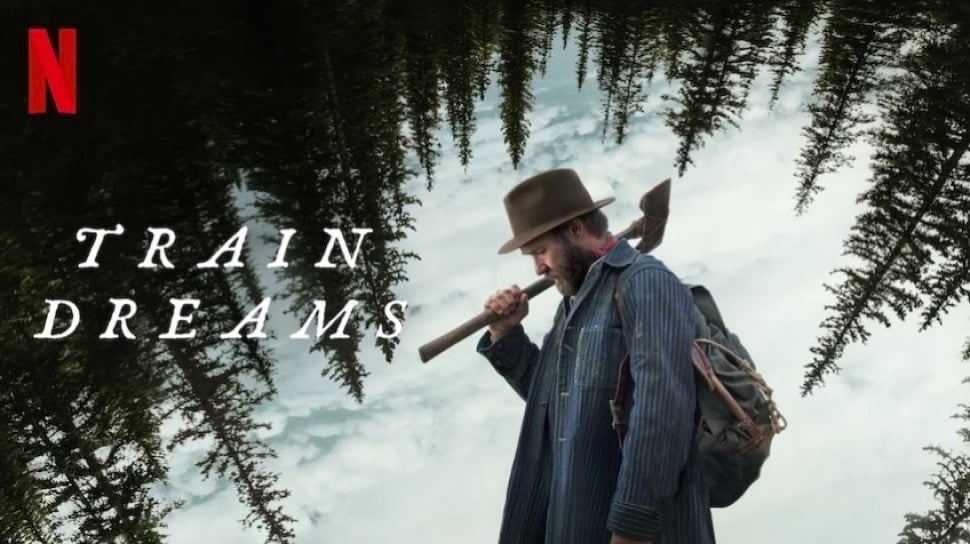
HOC Rating – ★★★★1/2
Despite all its artistic triumphs, the film’s true power lies in what it does to you. It makes you think, reflect, and compels you to confront the smallness and vastness of life at once. Few films today have the courage to be this quiet, this observant, this human. Train Dreams is not just a film but a meditation. A mirror. A quiet hymn to the lives we live and the lives we lose along the way.
What needs to be understood is that life is not a path you can carve as you will. It’s a path that you simply walk through till it ends. In the words of Ernest Hemingway, “We are all apprentices in a craft where no one ever becomes a master.”
If you have any questions regarding Train Dreams, feel free to ask in the comments below. For more content, stay tuned. As usual, like, subscribe, and share as we here are trying to build a community of people High on Cinema!