EXCLUSIVE: Sameer Talawdekar on Mumbai Standard Time, Aasha, AI Cinema and Future of Storytelling
 Abheet Gupta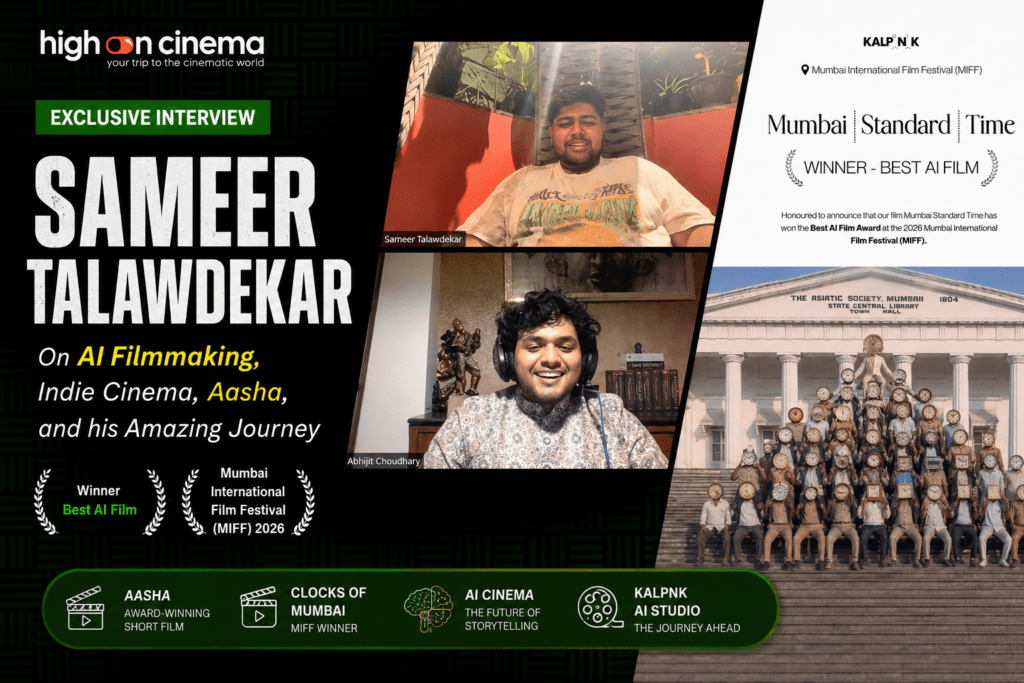
Before winning Best AI Film at the Mumbai International Film Festival, before launching Kalpnk AI Studio, and before earning recognition on the independent film festival circuit, Sameer Talawdekar was simply a storyteller searching for the right medium to express himself. Over the years, that search has taken him through screenwriting, short films, digital content, micro-cinema, and now AI-powered filmmaking, making him one of the more fascinating emerging voices in India’s evolving creative landscape.
From writing extensively about cinema, including a long association with High on Cinema itself, to directing the award-winning short film Aasha, building Chivitra’s experimental micro-movie format, and winning MIFF for his AI short Mumbai Standard Time (Clocks of Mumbai), Sameer’s journey has been anything but conventional. In an exclusive conversation with HIGH ON CINEMA, he reflected on the setbacks that shaped him, the lessons he learned through filmmaking, the opportunities and misconceptions surrounding AI cinema, and why storytelling will always remain a deeply human art.
The Rejected Direction Student Who Found His Voice Through Writing
Like many filmmakers, Sameer’s relationship with cinema began as a passionate obsession. Inspired by larger-than-life storytellers such as Christopher Nolan, S. S. Rajamouli and Sanjay Leela Bhansali, he eventually enrolled at Whistling Woods International to pursue filmmaking. However, his path did not unfold as expected.
“The funny part was despite being 19 people, I was amongst the two people that they rejected to not come into the direction batch that year. So that was quite heartbreaking. But then I joined Screenwriting and I feel like that happened to be the best decision that I did not take in my life.”
What initially felt like a setback eventually became a blessing. Screenwriting exposed him to film analysis, storytelling structure and the creative process in a way that would shape his future career. At the same time, he continued writing extensively about cinema, eventually publishing more than a thousand articles for HIGH ON CINEMA while refining his own understanding of storytelling.
Aasha and the Reality of Independent Filmmaking
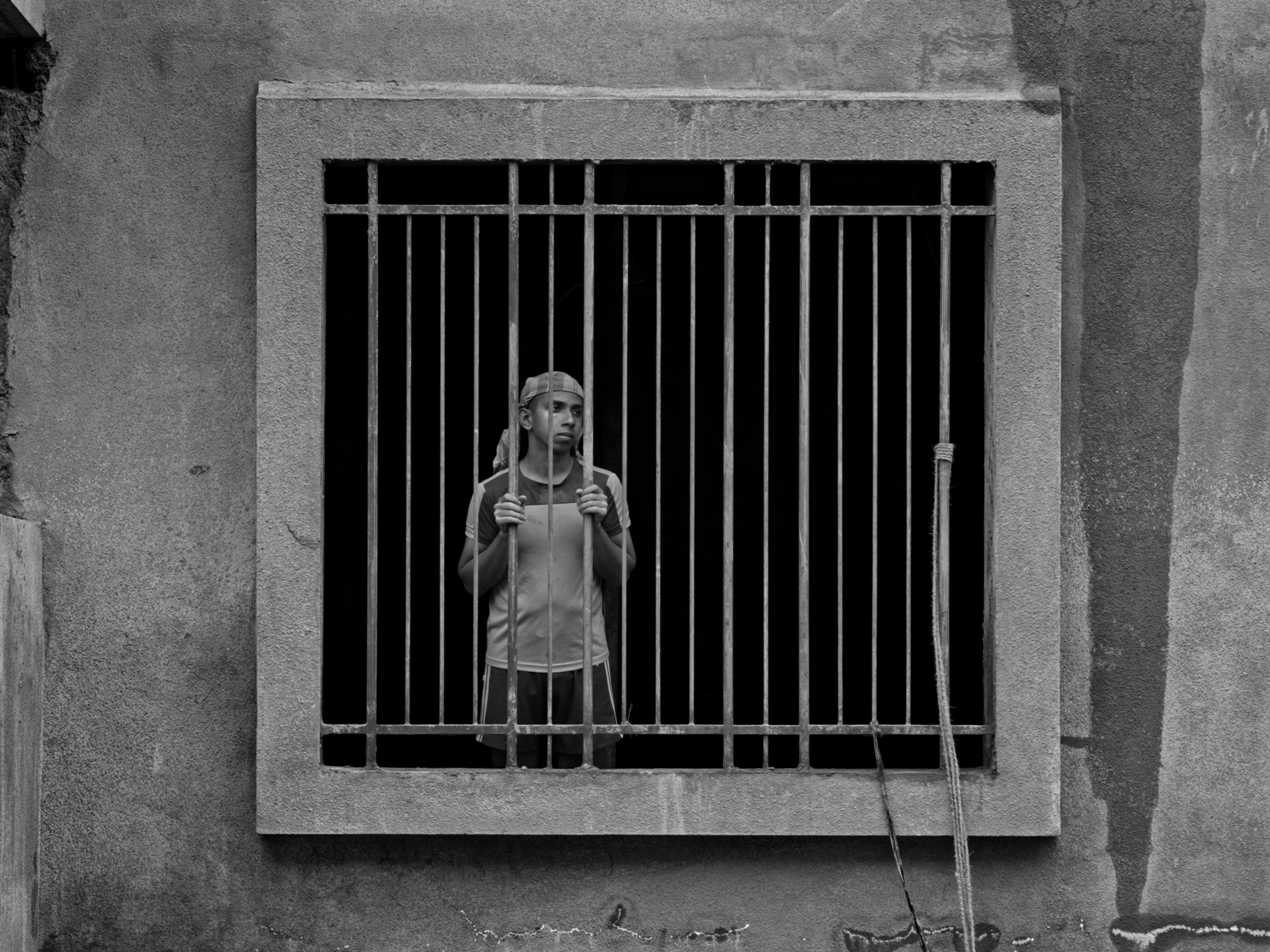
Sameer’s first directorial effort, A Blind Date, taught him valuable lessons, but it was Aasha that truly put his name on the festival circuit. The black-and-white short film earned nominations and awards across several festivals, including Durgapur International Film Festival, Jaipur International Film Festival and others. Yet despite its success, Sameer remains remarkably candid about the realities of independent filmmaking. “Aasha was the only film that turned out well, that I would be willing enough to show anyone very honestly.”
While Aasha collected around fifteen nominations and multiple wins, it also left him confronting an uncomfortable question that many independent filmmakers face after their first breakthrough. What comes next? Unlike many festival-oriented filmmakers, Sameer never saw himself making highly abstract art-house cinema.
“I can’t do that. I am someone who likes theatres. I’m someone who is hugely impressed by Bahubali. Aasha itself was a very new experience for me. I can’t go more artsy than this. This is my limit.”
Caught between commercial cinema and festival cinema, he found himself creatively uncertain, eventually stepping away from active filmmaking for a period while reassessing his future.
Chivitra, Micro-Cinema and Storytelling for the Instagram Generation
The next turning point arrived through an unlikely source: Instagram. As micro-dramas exploded across social media, Sameer saw an opportunity that excited him far more than traditional filmmaking.
“When microdramas came, I’m like, my God, Instagram storytelling. The app that I’m 24×7 addicted to now has storytelling in it. Nothing greater has ever happened to me.”
However, he wasn’t particularly impressed by most of the content being produced. Instead, he and Vishwajeet Pawar created Chivitra, a platform built around what they called “micromovies” rather than microdramas. The goal was simple: tell complete stories with the same creative intent and craftsmanship as traditional films, regardless of runtime or platform. Projects like Book My Yamraj and other experimental works emerged from this philosophy, eventually earning recognition among TVF’s Top 100 Storytellers.
For Sameer, the platform mattered less than the quality of storytelling.
“The people like you and me who are interested in good storytelling, regardless of the platform or regardless how it’s made, if it’s AI, if it’s traditional, whatever — as long as it’s good, they consume it.”
Mumbai Standard Time: Why He Believes AI Is a Tool, Not a Replacement
Today, Sameer’s primary focus lies with Kalpnk AI Studio, a company he co-founded alongside fellow filmmakers Aayush Raj and Manav Soni. The studio recently gained attention after Mumbai Standard Time won Best AI Film at the Mumbai International Film Festival. Yet despite being heavily invested in AI filmmaking, Sameer rejects the notion that AI is replacing human creativity.
“AI can make very good visuals but it can’t give you a story or it can’t give you, for a lack of a better word, a soul.”
According to him, the biggest advantage of AI lies not in storytelling but in accessibility. Traditional filmmaking often requires large crews, expensive equipment and significant financial resources. AI dramatically reduces these barriers. However, he repeatedly emphasized that the creative decisions still come from people. The writing, editing, sound design, pacing and emotional construction of Mumbai Standard Time remained fundamentally human-driven.
“That was no AI. That was a filmmaker doing his job. An editor doing what he’s very good at.”
Can AI Ever Match Human Storytelling?

Perhaps the most fascinating part of the conversation emerged when discussing AI’s future. While Sameer believes AI will become increasingly sophisticated, he remains skeptical about its ability to capture the emotional honesty found in the work of filmmakers such as Richard Linklater or Yasujirō Ozu.
“No. Never.”
Referencing films like Past Lives, he argued that AI currently struggles with the subtle human experiences that make cinema truly meaningful. “AI is the biggest machine to copy stuff from everyone”, he said. He pointed out that AI often defaults to clichés rather than genuine insight.
“If I would have asked ChatGPT to write the script for this film, it would have given a very ChatGPT-like script. Mumbai means rain, Vada Pav, all the clichés.”
For now, he sees AI as an incredibly powerful tool, but not a substitute for human perspective. The technology may evolve dramatically in the coming years, but the unique voice of an artist remains irreplaceable.
The Future Is AI & Kalpnk
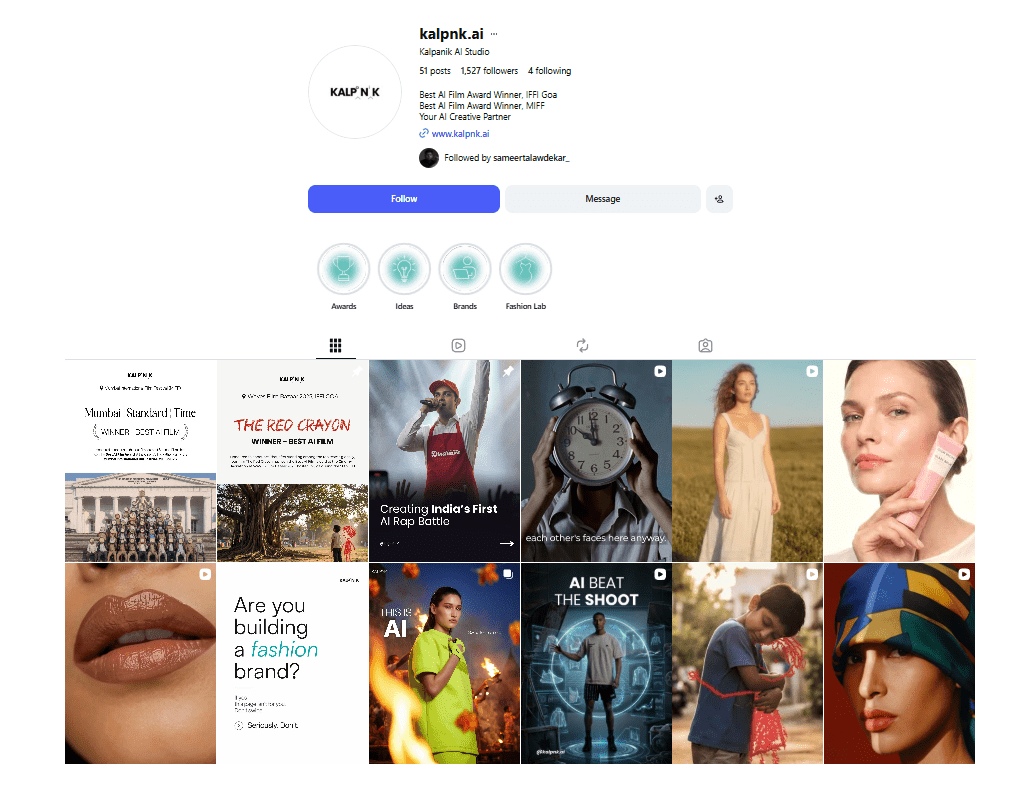
While Sameer continues to identify as a filmmaker first, his current focus is firmly fixed on AI-powered storytelling through Kalpnk. And he sees the present moment as a once-in-a-generation opportunity.
“We are at the intersection of a revolution that if you do it the right way, you will never say to your grandkids, ‘You know what, if I would have done that, we would be millionaires now.'”
It’s a bold statement, but perhaps fitting for someone whose career has repeatedly evolved alongside changing forms of storytelling. From writing film articles and directing short films to experimenting with Instagram-native narratives and winning awards for AI cinema, Sameer Talawdekar’s journey reflects a broader transformation happening across the creative industry itself.
Whether the future belongs to traditional filmmaking, AI-powered storytelling, or a blend of both, one thing remains clear: storytellers like Sameer are determined to be part of the conversation shaping it.
Mumbai Standard Time or Clocks of Mumbai, winner of the Best AI Film Award at the Mumbai International Film Festival, is now available to watch on Kalpanik AI Studio’s official Instagram page.
If you have any questions regarding Mumbai Standard Time or AI Filmmaking, feel free to ask in the comments below. For more exclusive filmmaker interviews, festival coverage, reviews and features, stay tuned to HIGH ON CINEMA!