EXCLUSIVE: From Physician to Filmmaker – J.T. Madicus on Final Diagnosis, Good Grief and an Unconventional Journey
 Abheet Gupta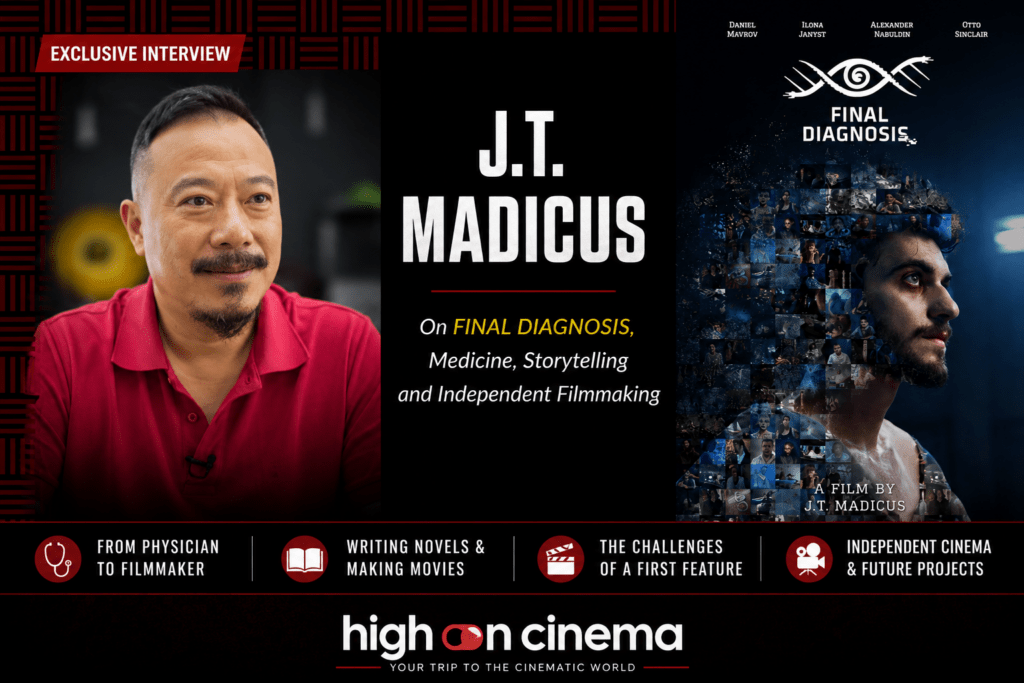
Most filmmakers spend years studying cinema, making short films, and slowly working their way toward a feature debut. J.T. Madicus or (Jason Tseng Madicus) arrived at filmmaking from an entirely different direction. Before writing and producing Final Diagnosis (directed by Gabriel Rodak), Madicus had already built a career in medicine and education. A physician by training, he spent years teaching medicine online and helping students navigate some of the field’s most challenging subjects.
What eventually pushed him toward storytelling wasn’t a desire to make movies, but a fascination with the human stories hidden behind medicine itself. That curiosity would eventually lead him from teaching to writing novels, and ultimately to filmmaking. In an exclusive conversation with HIGH ON CINEMA, Madicus reflected on his unlikely creative journey, the making of Final Diagnosis, and the ambitious projects he hopes to bring to life next.
From Medicine to Storytelling
For Madicus, storytelling began long before filmmaking entered the picture. While teaching medicine online, he found himself increasingly drawn to the narratives behind diagnoses and patient cases rather than simply the science itself. Microbiology, in particular, fascinated him, and eventually inspired him to begin writing fiction.
“I started teaching medicine on YouTube. And from there, it got boring, because it’s not very creative, it’s just medical. But the creative part of medicine was the story, the vignettes on how a patient comes in, presents symptoms, and you diagnose them. It’s very fascinating with microbiology. So I wrote a novel about medical situations. And I combined that with like a spy thriller situation, like James Bond. So it’s kind of like House MD meets James Bond.”
That novel would eventually become Final Diagnosis: No Second Chances. At first, Madicus simply wanted a creative way to promote the book. What followed would change the direction of his career entirely.
How Final Diagnosis Book Trailer Became a Feature Film
Unlike most first-time directors, Madicus never sat down with the intention of making a feature film. The original goal was much smaller: create a live-action trailer for his novel and use it to attract readers.
“I enjoyed writing the book, I wanted to promote the book. So I said, ‘Hey, let’s shoot a live-action trailer, a book trailer.’ And we shot so much footage, 11 days worth of footage that we just decided to continue shooting and turn it into a full feature.”
Production began before the COVID-19 pandemic and included shoots in both Poland and Los Angeles. Ironically, as the world entered a global health crisis, Madicus found himself finishing a film that involved bioterrorism and medical conspiracies. The timing wasn’t planned, but it gave the project an unexpected relevance.
“One of the lines is they’re an organization for bioterrorism. And this was going on with COVID. One of the security guards looked at me and said, ‘Did you write this? How is this happening at the same time as COVID?'”
What started as a marketing exercise had suddenly become a full-fledged feature film.
Cinema Inspired By Quentin Tarantino
One of the most interesting revelations from our conversation was that Madicus didn’t initially come into filmmaking as a lifelong cinephile. In many ways, he discovered cinema while making his first movie. As production wrapped and the footage began coming together, he realized the film wasn’t working the way he had imagined. The solution came from revisiting the work of one of his biggest cinematic influences.
“When we finished shooting and tried to piece the movie together based off of the script I wrote, it was really, really boring. One of the very inspirational filmmakers in our production is Quentin Tarantino. And then when we’re cutting the film, we’re just thinking, ‘Man, this movie is really, really boring.’ And we got this bright idea to kind of cut it like a Tarantino-style movie. And all of a sudden, we really got the flavor, the thriller aspect out of this film.”
Madicus points to Kill Bill as his favorite Tarantino film, though he also appreciates the filmmaker’s more recent work. More importantly, Tarantino’s storytelling helped him understand how editing, pacing, and structure can dramatically transform a movie after the cameras stop rolling.
The Challenges of Making a First Feature

Making a feature film is difficult under the best circumstances. Making one as a first-time filmmaker during a global pandemic presented an entirely different set of challenges. Beyond COVID-related disruptions, the production had to contend with weather, locations, and the realities of independent filmmaking.
“We had to shoot outdoors. It’s a port city. And it was winter. So we shot in the winter, in our wardrobe which was probably not ideal. I had one of my actresses in a spaghetti dress and it was freezing. I know it’s cold, but just own it.”
Despite the conditions, Madicus speaks warmly about the commitment shown by both cast and crew. Whether filming in freezing temperatures or navigating complex scenes involving firearms shortly after the tragic Rust incident, the team remained fully committed to bringing the story to life. The film was ultimately shot across Poland and Los Angeles, requiring extensive coordination and flexibility. Looking back, Madicus credits the dedication of the people around him for helping the production overcome obstacles that might have derailed many first-time filmmakers.
Final Diagnosis: Bringing Dr. Tseng to Life
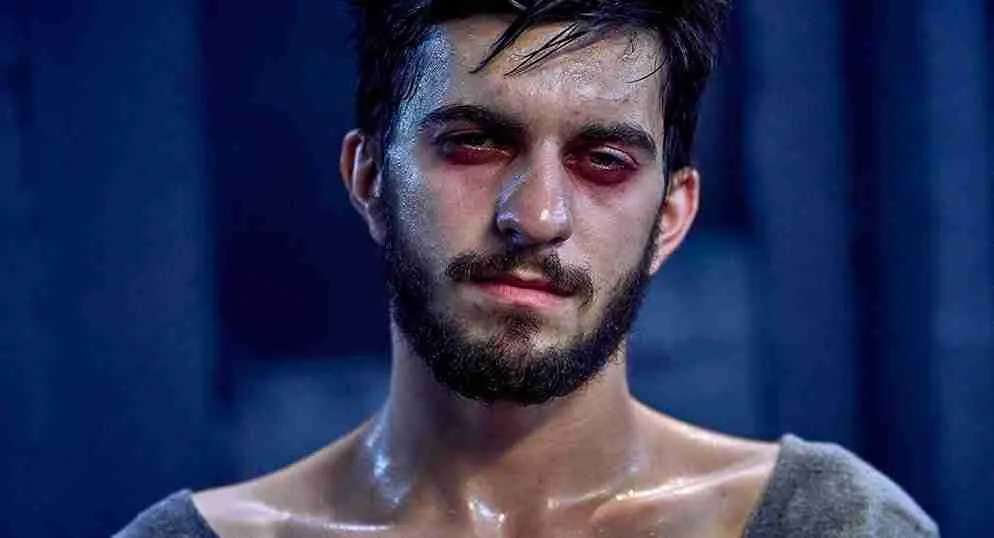
One of Final Diagnosis’ most intriguing elements is Dr. Tseng, a brilliant but deeply troubled character whose perception of reality often feels fragmented. According to Madicus, the character’s psychology came from a very personal place.
“What Dr. Tseng is based off of, is based off of me. I’ve lived life through a lot of pain. I was on narcotics. I was on painkillers for a long time. The narcotics change you. It changes your brain chemistry. It makes you kind of not who you really are.”
That personal experience helped shape many of the film’s visual choices, particularly the subjective sequences where audiences experience the world through Tseng’s altered perspective. Rather than simply depicting a character struggling with addiction and pain, Madicus wanted viewers to understand what that state of mind actually feels like. The result is one of the film’s most distinctive qualities: a sense that memories, hallucinations, and reality are constantly overlapping, forcing both Tseng and the audience to piece together the truth.
Finding the Perfect Dr. Tseng in David Mavrov
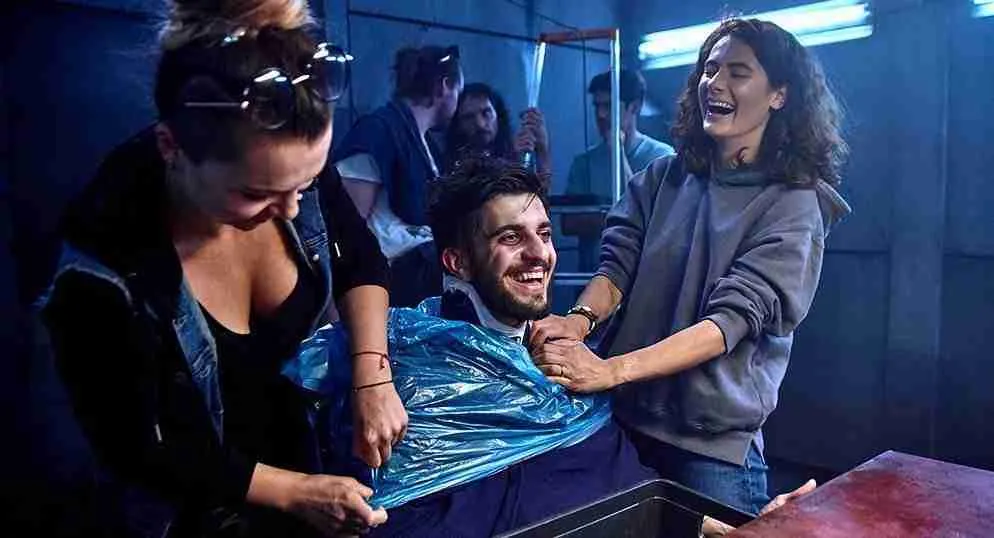
Much of that success ultimately depended on actor Daniel Mavrov, whose performance became one of the film’s strongest assets. Ironically, he almost wasn’t cast at all.
“He sent a tape and we’re like, ‘No, swipe left. He’s way too young.’ But he was persistent. He insisted on coming for the live audition. So he took a bus for like 12 hours from Prague to Poznań. He shows up, delivers the monologue perfectly, and I’m looking at my co-director like, ‘Oh man.’ It was destiny because we cast him.”
Recognizing Mavrov’s potential, Madicus adjusted aspects of the script and even spent several days working closely with the actor to help him understand Dr. Tseng’s mindset. Their collaboration extended beyond traditional rehearsals, allowing Mavrov to fully immerse himself in the character’s psychology. That preparation ultimately paid off, resulting in a performance that anchors much of the film’s emotional and psychological weight.
Big Screen Dreams for Final Diagnosis

While Final Diagnosis is arriving on VOD platforms, Madicus never viewed it solely as a streaming project. From the beginning, he wanted the film to work on the biggest screen possible.
“We knew it would play better on the big screen, but we obviously prepared it for streaming. When we did screenings and played it in the theatre with the sound and special effects, it really played well on the big screen.”
Like many independent filmmakers, he understands the realities of modern distribution. Yet his passion for theatrical experiences remains intact, and that ambition appears even stronger when discussing his next project. For Madicus, streaming may be where audiences discover Final Diagnosis, but cinema remains the ultimate destination.
Upcoming Movie ‘Good Grief’ and New Ambitions
If Final Diagnosis combined medicine with thriller elements, Madicus’ next film appears even more ambitious. Titled Good Grief, the project moves into mythology, spirituality, and the afterlife.
“It started off as a dark comedy, romantic comedy. But it’s kind of evolved into something more mythological. We have Lucifer, we have angels, we have a lot of death in this movie. But we follow these characters into purgatory.”
The project also became deeply personal. During production, Madicus lost both of his parents in close succession, forcing filming to stop. A separate short film, In Another Life, was assembled from footage already shot, while the larger feature remained unfinished.
“Production stopped because I actually literally went through some good grief. Both my parents died back to back. After my mother passed, I kind of tried to get the band together. And we were actually able to get like 90 percent of the cast back.”
The experience changed the project, requiring new scenes and creative adjustments. Yet it also gave the story an emotional resonance that no script revision could have planned. The filmmaker is also returning to the literary world. During our conversation, Madicus revealed that he has completed a second novel set within the Final Diagnosis universe. Titled Final Diagnosis: School of Medicine, the book will continue the story introduced in Final Diagnosis: No Second Chances, further expanding the world and characters that first sparked his journey into filmmaking.
A Journey Still Unfolding
From physician and educator to novelist and filmmaker, J.T. Madicus has followed a path unlike most directors. Yet throughout our conversation, one quality surfaced repeatedly: curiosity. Whether teaching medicine, writing books, or directing films, he seems driven by a desire to explore new ways of telling stories.
“It’s surreal. Even when I started teaching medicine on YouTube and getting followers, I thought, ‘Wow, this is something people enjoy.’ Then I wrote a novel. Then that got published. And now we’ve made films. It’s surreal.”
For someone who never intended to become a filmmaker, Madicus has already built a remarkably diverse creative career. And judging by the scale of Good Grief and the stories he still wants to tell, his most ambitious work may still lie ahead.
Final Diagnosis: No Second Chances arrives on VOD platforms on June 9, marking the latest chapter in Madicus’ remarkable journey from physician and educator to novelist and filmmaker. Whether audiences connect with its medical mysteries, psychological tension, or espionage elements, the film stands as proof that creative paths rarely follow a straight line.
If you have any questions regarding Final Diagnosis: No Second Chances, feel free to ask in the comments below. For more updates, stay tuned and stay High on Cinema!