Abheet Gupta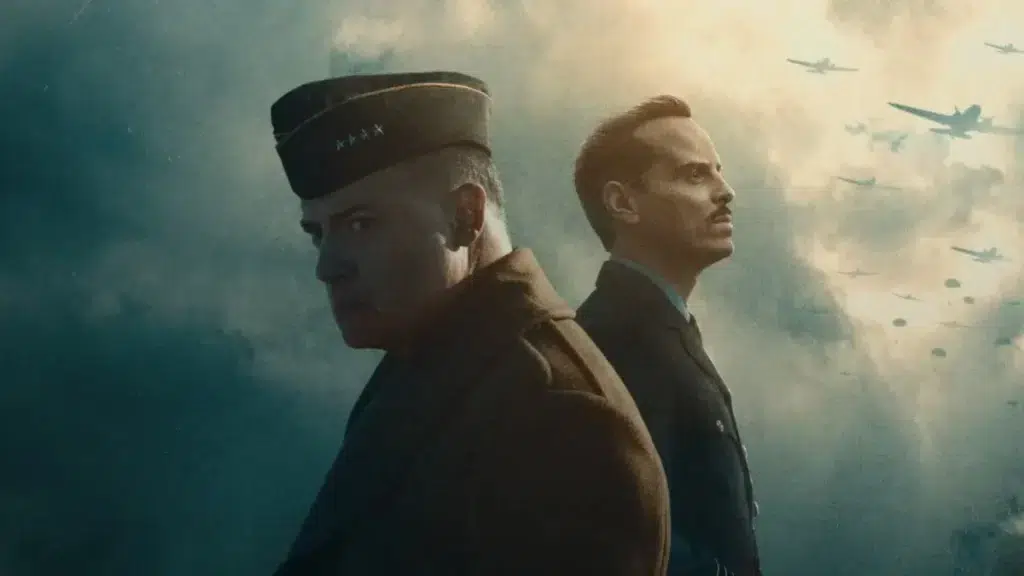
War films about D-Day are hardly a rarity. Over the decades, filmmakers have explored the Normandy landings from nearly every conceivable angle. Pressure manages to stand out by shifting the focus away from the battlefield and onto the men whose decisions determined whether the invasion would happen at all. Centered on the crucial weather forecasts that preceded the landings, Anthony Maras’ latest drama delivers a tense, tightly constructed historical thriller anchored by another excellent Andrew Scott performance.
Andrew Scott Carries the Weight of the World

Andrew Scott knocks it out of the park yet again after delivering fantastic performances last year in Blue Moon and Wake Up Dead Men. His portrayal of James Stagg is the driving force behind the film and perfectly captures the immense pressure resting on the meteorologist’s shoulders. Stagg is rarely portrayed as calm or composed. Instead, he comes across as an irritable, exhausted man who almost resents seeing others enjoy themselves while the fate of the free world hangs in the balance.
Scott makes that frustration feel tangible throughout the film. Even though Stagg is typically stern and serious, the few moments where emotion breaks through leave just as much impact as his more controlled scenes. The standout moment arrives during a military briefing when Stagg finally lashes out in front of the assembled commanders, delivering an impassioned speech about the unpredictability and wrath of nature. It is easily the film’s defining scene and one that perfectly encapsulates both the character and Scott’s performance.
A Strong Supporting Cast, Though Fraser Isn’t Always Convincing
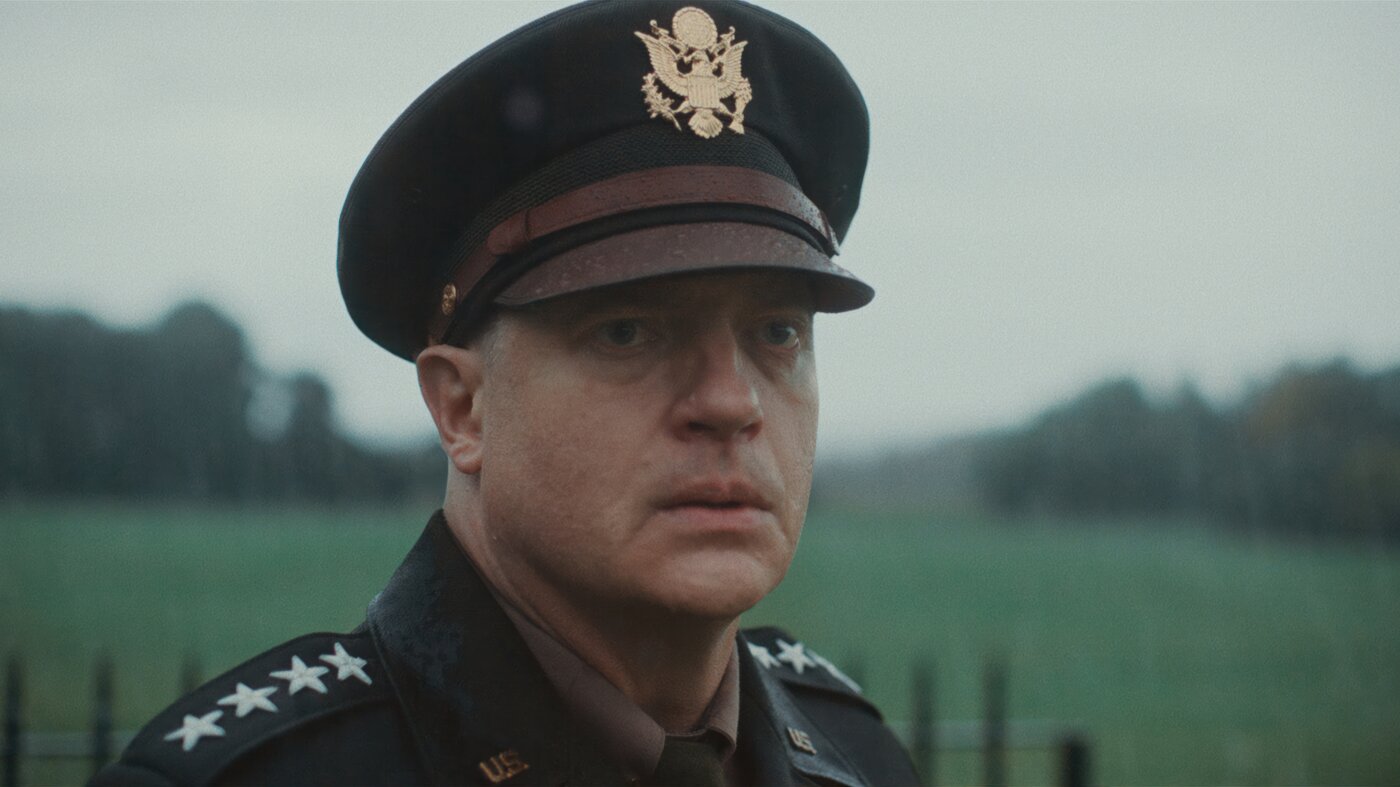
Brendan Fraser, Kerry Condon, and Chris Messina all do solid work with the material they are given. Messina’s Irwin P. Kirk enjoys perhaps the strongest arc outside of Stagg himself. He begins as an overconfident know-it-all whose certainty is gradually shattered by forces beyond his control. Watching him evolve from arrogance to humility and eventually become a valuable ally is one of the film’s more satisfying character journeys.
Kerry Condon’s character serves a far greater purpose than simply filling a necessary female character role. She acts as a vital source of stability and emotional support for both Stagg and Eisenhower, contributing meaningfully to the story whenever she appears. As for Eisenhower, Fraser presents a mixed bag. He absolutely looks the part and excels in the quieter, more reflective moments. His calm demeanor and understated scenes feel authentic to the legendary military leader. However, the moments that require Eisenhower to erupt in anger are far less successful.
Unlike his recent commendable work in The Whale, Killers of the Flower Moon, or Rental Family, Fraser struggles whenever the script asks him to raise his voice. The yelling scenes feel forced, almost as if the effort required to perform them becomes visible on screen. As a result, those sequences never land with the impact they should. While Fraser captures Eisenhower’s demeanor well, the performance falls short whenever intensity is required.
The Shortcomings: Tense, Well-Made, But Missing an Emotional Core
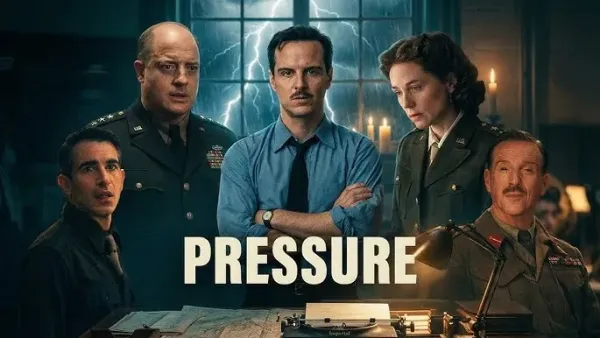
One of Pressure’s greatest strengths is its pacing. The film remains gripping throughout its runtime and never overstays its welcome. Maras keeps the tension high while ensuring the story remains accessible rather than drowning viewers in technical jargon. Whether that’s a positive or a negative will depend on the viewer. Personally, I would have preferred more technical discussion surrounding meteorology and forecasting. Given that this is essentially a tightly packed 72-hour drama built around weather predictions, diving deeper into the science could have made the experience even more immersive.
The film’s biggest weakness is its lack of emotional connection. While it attempts to humanize its protagonists, they never feel much deeper than their historical importance. The subplot involving Stagg’s pregnant wife serves mainly as another source of his mental pressure rather than a genuinely affecting emotional thread. Despite the film opening and closing with the couple, those scenes fail to leave a lasting impact.
The rest of the cast receives even less personal development. While that is understandable given the film’s focus, a few anecdotes about family, loved ones, or life outside the war room could have significantly elevated both the emotional stakes and the sense of what was truly at risk.
Final Thoughts: A Fresh Perspective on D-Day
Despite those shortcomings, Pressure remains a very well-written and confidently directed film. It stays firmly committed to its premise and rarely loses focus. The visuals are often beautifully framed, while the score does an excellent job of maintaining tension and raising the stakes whenever necessary. The climactic Normandy landing sequence will inevitably remind viewers of Saving Private Ryan, albeit without the same graphic brutality. The similarities are striking enough that watching the two films back-to-back would make for an excellent D-Day double feature.
What ultimately makes Pressure special is its perspective. Rather than depicting the soldiers storming the beaches, it focuses on the agonizing decisions that made the invasion possible in the first place. In doing so, it delivers something genuinely fresh within a subgenre that often feels oversaturated. For that reason alone, Pressure stands as one of the finest films of the year so far and a movie that absolutely deserves an audience. Yes, it could have become an all-time great with stronger character work and an even more intense exploration of its subject matter. But what it achieves is still highly impressive.
HOC Rating: ★★★★☆
If you have any questions regarding Pressure, feel free to ask in the comments below. For more content, stay tuned. As usual, like, subscribe, and share our articles as we here are trying to build a community of people High on Cinema!